
At vero eos et accusamus et iusto odio dignissimos ducimus qui blanditiis praesentium
Featured Post






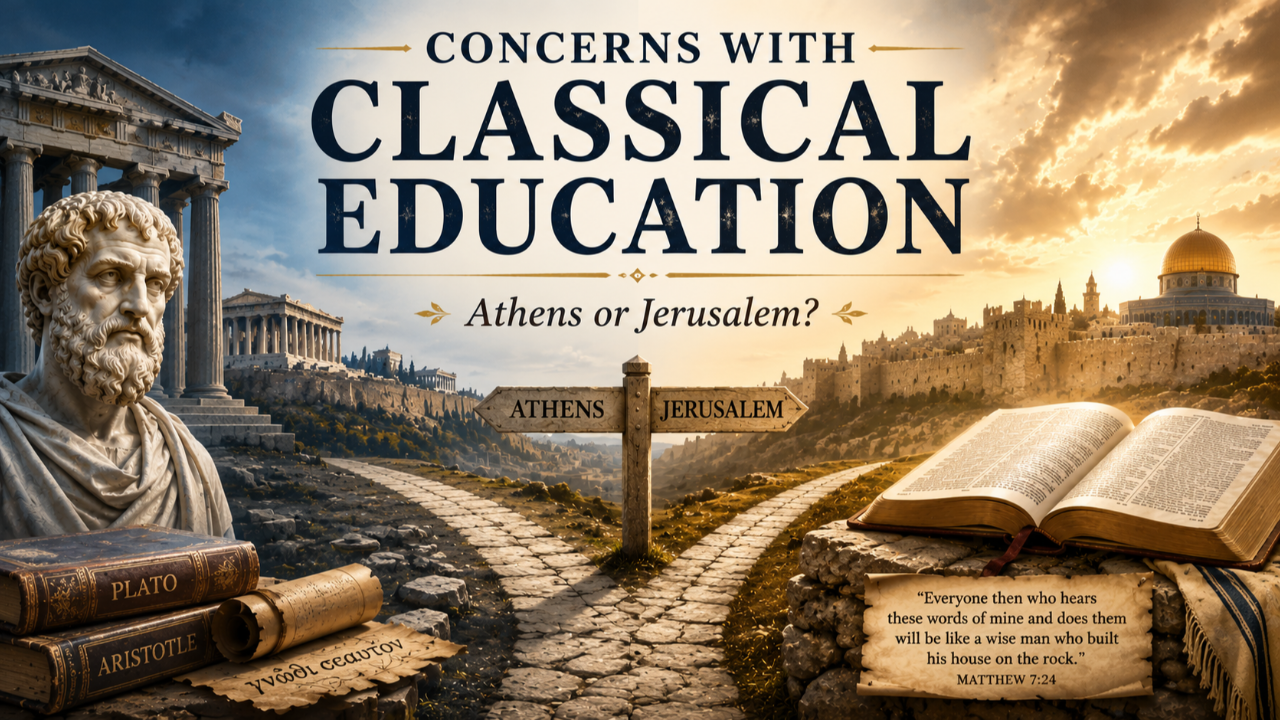
Concerns with Classical Christian Education
Classical education is having a moment. Homeschoolers, charter schools, and Christian academies are embracing the Great Books, the Trivium, and the educational traditions of Greece and Rome in an effort to recover academic rigor and moral formation. Many parents are drawn to its emphasis on logic, careful reading, rich literature, and thoughtful discussion. In an age of declining literacy and shallow thinking, the appeal is understandable.
Yet as I have watched the movement grow (since the 90s) I have found myself asking a question that seems strangely absent from the conversation:
Why do Christians work so hard to recover Athens while giving comparatively little attention to Jerusalem?
This is not a question about whether the Greeks were intelligent. They were. Nor is it a question about whether logic, rhetoric, and disciplined thinking have value. They do. The deeper issue concerns foundations.
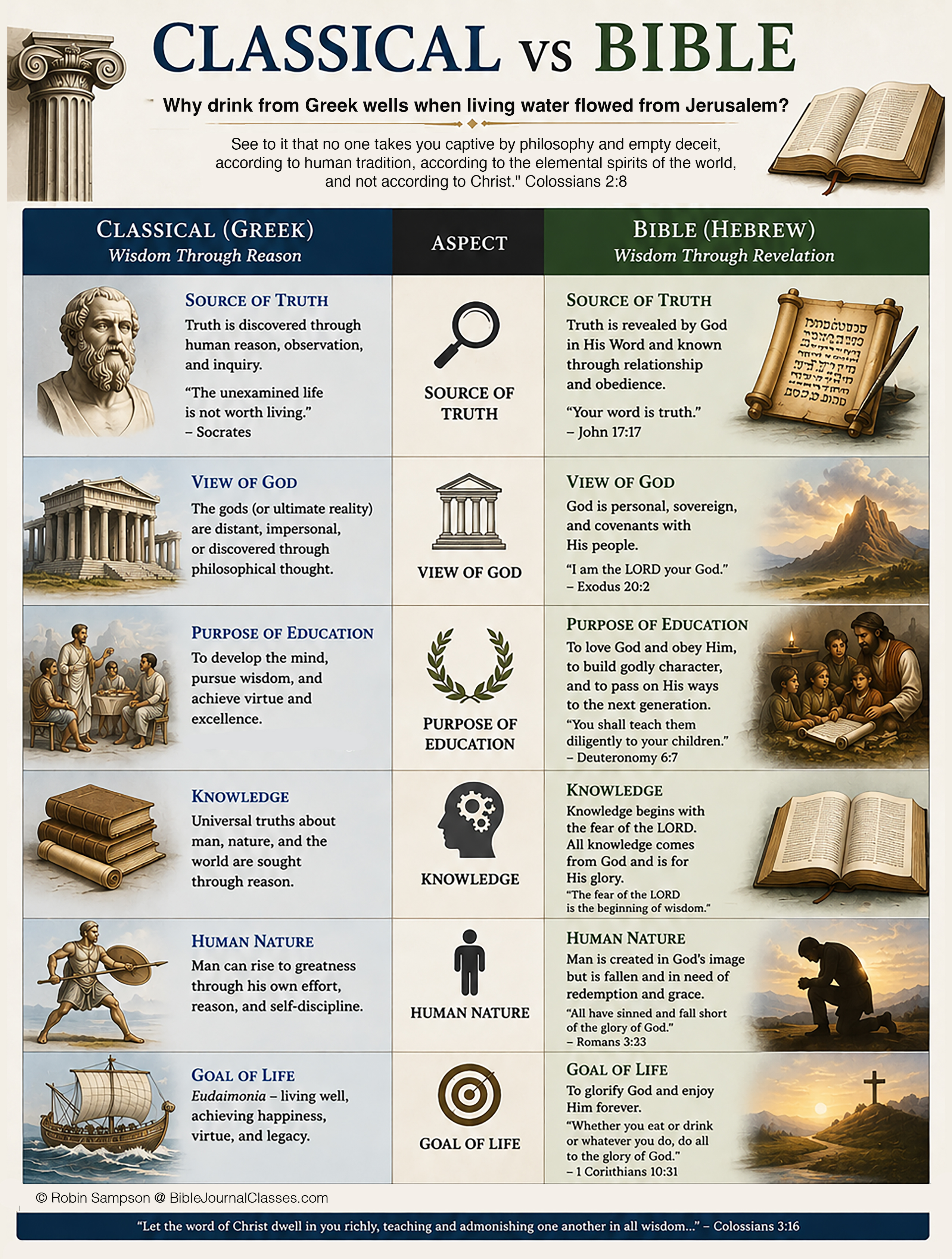
The Pattern Repeats Throughout Scripture
Over the past several months, I have immersed myself in the story of Scripture, from Abraham's call to leave Ur to the rise and fall of Israel's kingdom. As I studied these accounts, a striking pattern emerged.
God's people rarely abandoned Him all at once.
Instead, they slowly adapted the ways of the surrounding culture.
Abraham went down to Egypt and adopted worldly schemes to protect himself. Israel longed for the gods of Egypt. At Sinai they fashioned a golden calf. During the Conquest they compromised with the nations around them. In Judges, every generation looked a little more like Canaan. The people demanded a king "like all the nations." Solomon imported foreign wives, foreign alliances, and foreign gods. Jeroboam created a more convenient religion.
Again and again, God's people attempted to blend God's truth with man's wisdom.
The danger was rarely outright rebellion at first. The danger was accommodation.
As I read these stories, I cannot help wondering whether Christians today should ask a similar question about education. Are we looking first to God's revelation, or are we borrowing our educational philosophy from cultures that did not know Him? Byy ancient Greek philosophers worshipped and revered Apollo, their god of reason, order, and prophecy.
A Tool or a Map?
Many advocates describe classical education as a collection of educational tools. But tools and philosophies are not the same thing.
A hammer is a tool. You can use it to build a church or a casino. The hammer itself has no worldview.
A philosophy is more like a map. A map tells you where you are, where you should go, and how to get there. If the map is wrong, it does not matter how skilled you are at reading it. You will still end up in the wrong place.
Educational methods do not exist in a vacuum. They arise from assumptions about truth, knowledge, human nature, and the purpose of life. Every educational philosophy begins somewhere.
The question is not whether classical education contains useful tools. The question is whether the map beneath those tools reflects biblical assumptions or pagan ones.
It's About the Foundation
Jesus taught that the most important question is not what we build but what foundation we build upon.
In the parable of the wise and foolish builders, both men built houses. Both may have used similar materials, similar techniques, and similar tools. The difference was hidden beneath the surface.
One built on rock.
The other built on sand.

When the storms came, the foundation determined the outcome.
Educational methods such as logic, rhetoric, discussion, and careful reading are not the foundation. They are building materials. The real question is what lies underneath.
The Hebrew worldview begins with God speaking. Truth is revealed by the Creator.
"The fear of the LORD is the beginning of wisdom."
Proverbs 9:10 (ESV)
Classical Greek philosophy began with man seeking truth through observation, debate, and reason. Even its greatest thinkers did not know the God of Abraham, Isaac, and Jacob.
The issue is not whether some Greek ideas contain insights. The issue is foundation. Are we building upon the rock of God's revelation or upon the sand of human speculation?
A house built on sand may look impressive for a time. It may even appear stronger than the house on the rock. But when the storms come, the foundation is revealed.
Revelation or Speculation?
The Greeks asked profound questions. Plato, Aristotle, and the Stoics wrestled with justice, virtue, beauty, and the nature of reality. Their intellectual achievements are undeniable.
But they were searching.
Israel was receiving.
The Greeks reasoned upward toward heaven.
The Hebrews received revelation from heaven.
That distinction matters.
The prophets did not gather the people to speculate about ultimate reality. They declared, "Thus says the LORD." Their authority rested not on intellectual discovery but on divine revelation.
The classical tradition begins with man seeking truth.
The biblical tradition begins with God revealing truth.
Those are very different starting points.
What About the Trivium?
One of the hallmarks of modern classical education is the Trivium: grammar, logic, and rhetoric.
Certainly children should learn language, reasoning, and communication. Scripture itself values wise speech, sound judgment, and careful use of words.
The modern version of the Trivium largely comes from Dorothy Sayers' 1947 essay The Lost Tools of Learning is silly to me. Children of all ages memorize, reason, and communicate. A six-year-old can reason. A teenager still memorizes. Adults continue doing all three.
The Trivium is a bit like someone taking a simple recipe and giving every step a sophisticated name.
• Gather ingredients = Grammar
• Mix ingredients = Logic
• Serve the meal = Rhetoric
The meal may be excellent, but the fancy labels did not create the meal. Good cooks have been doing those things all along.
But the Bible never presents the Trivium as God's educational model.
Moses did not teach it.
The prophets did not teach it.
Jesus did not teach it.
Paul did not teach it.
What Scripture presents instead is a model centered on discipleship, remembrance, conversation, imitation, worship, and obedience.
Deuteronomy 6 does not describe education as mastering academic stages. It describes parents teaching God's Word throughout daily life:
"You shall teach them diligently to your children." Deuteronomy 6:7
Children learn while walking, talking, eating, celebrating, remembering, and worshiping.
The goal is not merely intellectual mastery.
The goal is wisdom.
The goal is covenant faithfulness.
The goal is knowing God.
If the Trivium arose within a particular philosophical tradition, can it be completely separated from the assumptions that shaped it? That question deserves more consideration than it often receives.
The Educational Philosophy We Already Have
What strikes me most is that Scripture already contains an educational vision.
The Hebrew model was not primarily concerned with producing scholars, philosophers, lawyers, or statesmen. It was concerned with producing faithful men and women who knew God, loved His Word, and walked in His ways.
Education was woven into family life.
It was connected to worship.
It was reinforced through feasts, stories, songs, and shared memory.
Children learned not merely by studying information but by participating in a covenant community.
Before Christians search the ancient world for educational models, perhaps we should spend more time asking whether God has already given one.
The Real Question
The question is not whether classical education can produce articulate students. It can.
The question is not whether logic, rhetoric, and careful reading have value. They do.
The question is far more fundamental.
When we seek wisdom, where do we look first?
Do we begin with human reason searching for truth, or do we begin with God's revelation declaring truth?
Throughout Scripture, God's people repeatedly faced the temptation to adapt the wisdom of the surrounding culture rather than trust the wisdom God had already revealed.
That temptation has never disappeared.
If God has spoken, why do Christians so often look first to the philosophers rather than to the prophets?
Athens sought wisdom.
Jerusalem received it.
That distinction may be one of the most important educational questions of all.
Pray about it. God will answer.
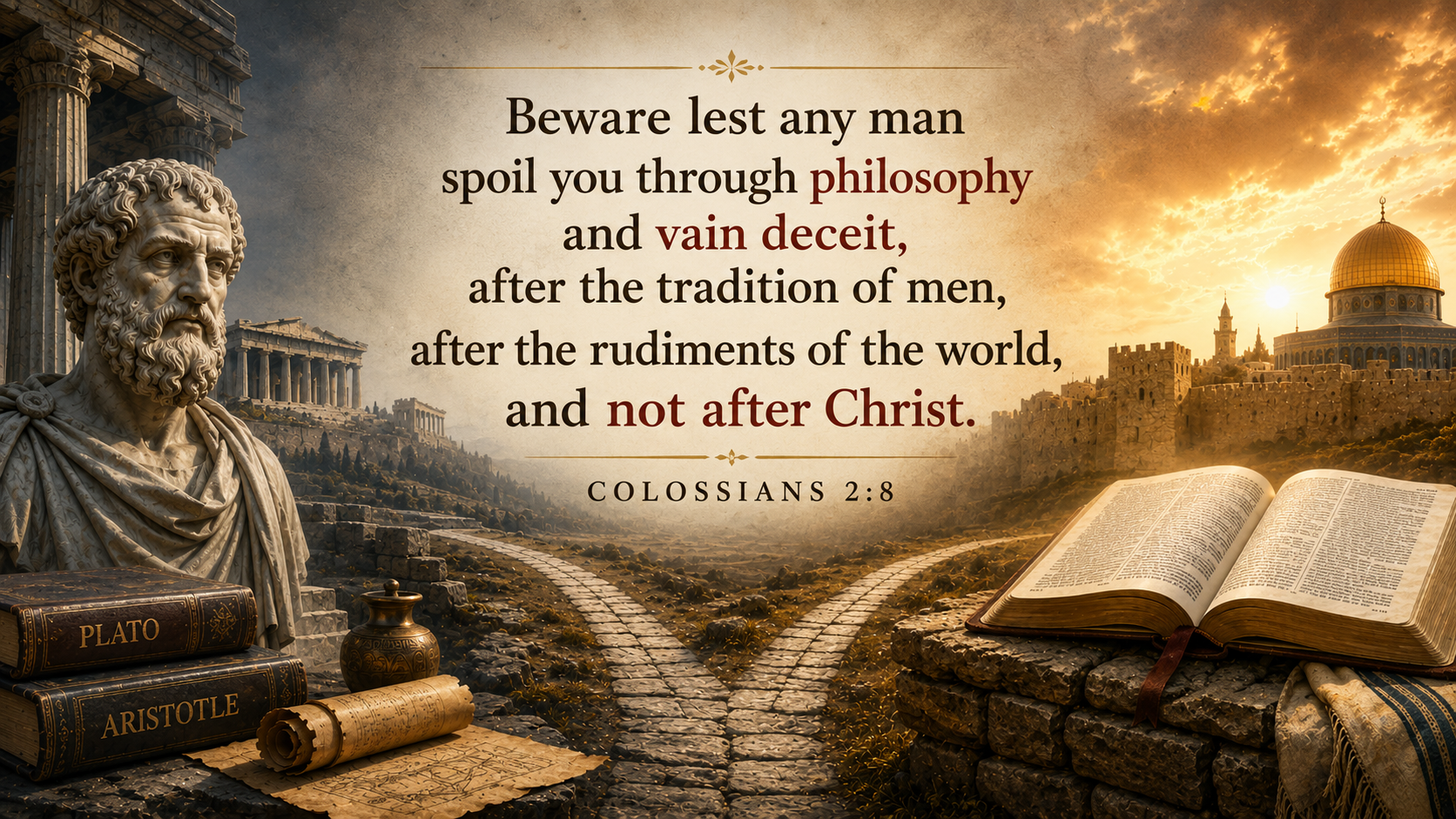
"Beware lest any man spoil you through philosophy and vain deceit, after the tradition of men, after the rudiments of the world, and not after Christ." Colossians 2:8
