
At vero eos et accusamus et iusto odio dignissimos ducimus qui blanditiis praesentium
Featured Post

Rethinking Learning Styles
Biblical Truth for Homeschoolers
Imagine you're preparing dinner for your family. One child only eats food cut into small pieces. Another refuses anything touching on the plate. A third will only eat with their hands. So you decide: from now on, every meal will be served pureed in a bowl, since one child preferred that once.
Ridiculous, right? Yet this is exactly what happens when we identify a child's "learning style" and then teach exclusively to that preference. We take a momentary snapshot and turn it into a permanent identity. We offer sameness when they need variety. We limit growth in the name of comfort.
Understanding Learning Differences in Your Homeschool
Here's something that might surprise you: seventy percent of students don't thrive with traditional lecture-textbook-test methods. If you've been wrestling with guilt because your child isn't responding to the curriculum that "should" work, take a breath. The problem isn't your child. The problem is teaching in only one way.
But here's where wisdom gets clouded by myth. You've probably heard about "learning styles"—the idea that children are either visual, auditory, or kinesthetic learners, and you must match your teaching to their specific type. It sounds perfect, doesn't it? Scientific. Personalized. Except for one crucial detail: cognitive science research has definitively debunked this theory.
The Truth About Learning Styles
Studies show that at least 90% of teachers believe in learning styles, yet no credible research demonstrates that matching instruction to a student's preferred learning style improves outcomes. In fact, some students perform better when taught in a different modality than their self-identified "learning style".
Does this mean your child who loves drawing doesn't exist? Of course not. Does it mean your hands-on learner is imaginary? Absolutely not. What it means is this: preferences are not the same as limitations.
When we label a child as "only a visual learner," we accidentally cage them. We limit their growth. We teach them that struggle means incompatibility rather than growth. And most dangerously, we might withhold teaching methods that could unlock understanding simply because they don't match the label we've assigned.
A Better Framework: Teaching in Multiple Modes
This is where the 4MAT approach offers genuine wisdom—not because it sorts children into boxes, but because it refuses to.
Developed by Bernice McCarthy in 1980, the 4MAT model recognizes that while learners may have preferences, everyone benefits from engaging with content through multiple approaches. Rather than teaching exclusively to one "type," effective instruction moves through four distinct phases that address different questions learners ask:
- Type 1: Imaginative Learners ask "Why should I learn this?"
These children—and all children at some point—need personal connection. They need to see how this lesson touches their life, their heart, their world. They thrive on relationships, stories, and meaning. - Type 2: Analytic Learners ask "What do I need to know?"
These are the fact-finders, the question-askers. They want information, details, and understanding. Traditional school excels here—which is why it works for some students and leaves others behind. - Type 3: Common Sense Learners ask "How does this work?"
These are your engineers, your tinkerers. They need to touch, build, experiment, and apply. Abstract concepts become real when their hands get involved. - Type 4: Dynamic Learners ask "What can I do with this?"
These are the innovators who want to take knowledge and run with it. They need creative application, personal adaptation, and the freedom to make the learning their own.
The Revolutionary Insight
Here's what changes everything: Your child is not just one of these types. Your child is all of them.
In different subjects, at different ages, in different moods, every learner needs each of these approaches. The math concept that clicks through hands-on manipulatives. The history lesson that comes alive through story. The science experiment that makes sense when they can explain it to someone else.
Rather than limiting students to one mode, research shows that embracing discomfort—stepping outside preferred learning approaches—actually deepens understanding. Sometimes the teaching method that feels hardest is the one where the deepest processing happens.
Practical Application for Your Homeschool
Does this mean you need four separate lesson plans for every subject? Absolutely not. It means you thoughtfully incorporate variety:
- Connect to Life (Why?)
Begin with relevance. "We're studying fractions today because you need them when we bake, when we measure for your fort, when we split things fairly." - Teach the Content (What?)
Present information clearly. Read together. Explain concepts. Answer their "what" questions thoroughly. - Apply and Experiment (How?)
Let them do something with the knowledge. Work problems. Conduct experiments. Build models. Create projects. - Innovate and Adapt (What if?)
Give space for creative application. How would they use this? What would they change? How can they teach someone else?
You don't need to hit all four every single day. But over the course of a week, a unit, a semester—variety ensures every child has moments of comfort and moments of stretch.
A Word of Caution
Christians must approach any educational theory with discernment. As with other discoveries, secular education sometimes takes useful insights and distorts them to fit worldviews that contradict Scripture. We don't discard automobiles or eyeglasses because nonbelievers invented them, but we do check everything against God's Word.
The Bible is clear: we are different parts of one body, each with unique gifts and strengths. No one style is superior. No single approach is "better" than another.
"For as the body is one, and hath many members, and all the members of that one body, being many, are one body: so also is Christ... But now hath God set the members every one of them in the body, as it hath pleased him." (1 Corinthians 12:12, 18)
God designed diversity by intention, not accident. Our task isn't to force conformity but to nurture the unique combination He placed in each child—while also building strength in areas that don't come naturally.
Never use learning differences as an excuse for sin, laziness, or refusing to grow. Never let "I'm not that type of learner" become permission to avoid hard things. Our responsibility is to recognize strengths while compassionately strengthening weaknesses.
Brain Science Worth Knowing
Here's what neuroscience actually tells us:
- Right and Left Hemispheres: The two sides of your child's brain specialize in different modes of thinking—logic and sequence versus intuition and creativity. Both hemispheres must work together for complex learning, which is why teaching should engage both analytical and creative thinking.
- Sensory Channels Matter for Content, Not Children: Visual presentations work better for spatial concepts. Verbal explanations work better for language. Musical patterns work better for rhythm. The content determines the best teaching method, not the child's "type".
- Prior Knowledge Trumps "Style": Research shows that what a student already knows has more impact on how they learn new material than any supposed learning preference.
The Liberating Truth
Here's what this means for your homeschool: You don't need to figure out your child's "learning style" and then panic about teaching perfectly to it.
Instead:
- Teach rich, varied lessons that engage multiple senses
- Connect abstract concepts to concrete applications
- Tell stories and present facts
- Let them read it, hear it, do it, teach it
- Recognize their strengths without limiting their growth
- Push gently into areas of discomfort where real learning happens
When your visual child struggles to follow verbal instructions, you're not teaching "wrong"—you're teaching them a crucial life skill. When your kinesthetic child must sit and read, you're not crushing their spirit—you're expanding their capacity.
The Real Goal
We're not preparing children for a life where everything comes easily in their preferred style. We're preparing them for a world that will demand flexibility, resilience, and the ability to learn through whatever method presents itself.
The student who can only learn one way is fragile. The student who can learn through multiple approaches is strong.
Your homeschool should feel like a feast, not a factory. Some courses will emphasize hands-on learning. Others will require more reading and discussion. Some will blend all approaches. This isn't inconsistency, this is wisdom.
Moving Forward with Confidence
If you've been anxiously trying to identify each child's learning style and match everything perfectly, release that burden. You've been carrying weight God never intended.
Instead:
- Observe what captures each child's interest and attention—not to limit them to it, but to begin there
- Incorporate variety intentionally—different approaches for different content and different days
- Watch for struggle as a sign of growth, not necessarily a mismatch
- Teach children to articulate how they learn best—not as an identity but as self-awareness
- Model adaptability yourself—show them that we all learn to learn in new ways
Remember: People have different preferences in all areas of life. Some love broccoli, others prefer spinach. Some love discussion, others treasure quiet. These preferences shift with seasons and circumstances. The task for parents is to prove to children that every mode of learning prepares them for the unforeseen and ever-changing patterns of life.
The Heart of the Matter
You are not called to be a perfect teacher who never makes mistakes. You're called to be a faithful teacher who keeps showing up, keeps trying new approaches, and keeps trusting God to fill in the gaps.
Your child's capacity to learn isn't fixed at birth. Intelligence isn't static. Understanding develops. And the best gift you can give isn't a perfectly matched "learning style" curriculum—it's the model of a mother who herself keeps learning, adapting, and growing.
So teach the story. Explain the facts. Let them build with their hands. Give space for creative application. Repeat the cycle. Trust the process.
And remember this profound truth: You're not just teaching content. You're teaching them how to learn anything, anywhere, in any circumstance—for the rest of their lives.
That's not a burden. That's a calling.
And you, dear mother, are exactly who God chose to fulfill it.
"For the body is not one member, but many... But now hath God set the members every one of them in the body, as it hath pleased him. And if they were all one member, where were the body?" (1 Corinthians 12:14, 18-19)
Homeschool Facebook Group
Need encouragement for your homeschool journey? Join our uplifting Facebook community where parents share ideas, faith, and support every step of the way. You’ll find inspiration, free resources, and real conversations that remind you—you’re not alone in this calling! Come be part of the conversation.

About the Images
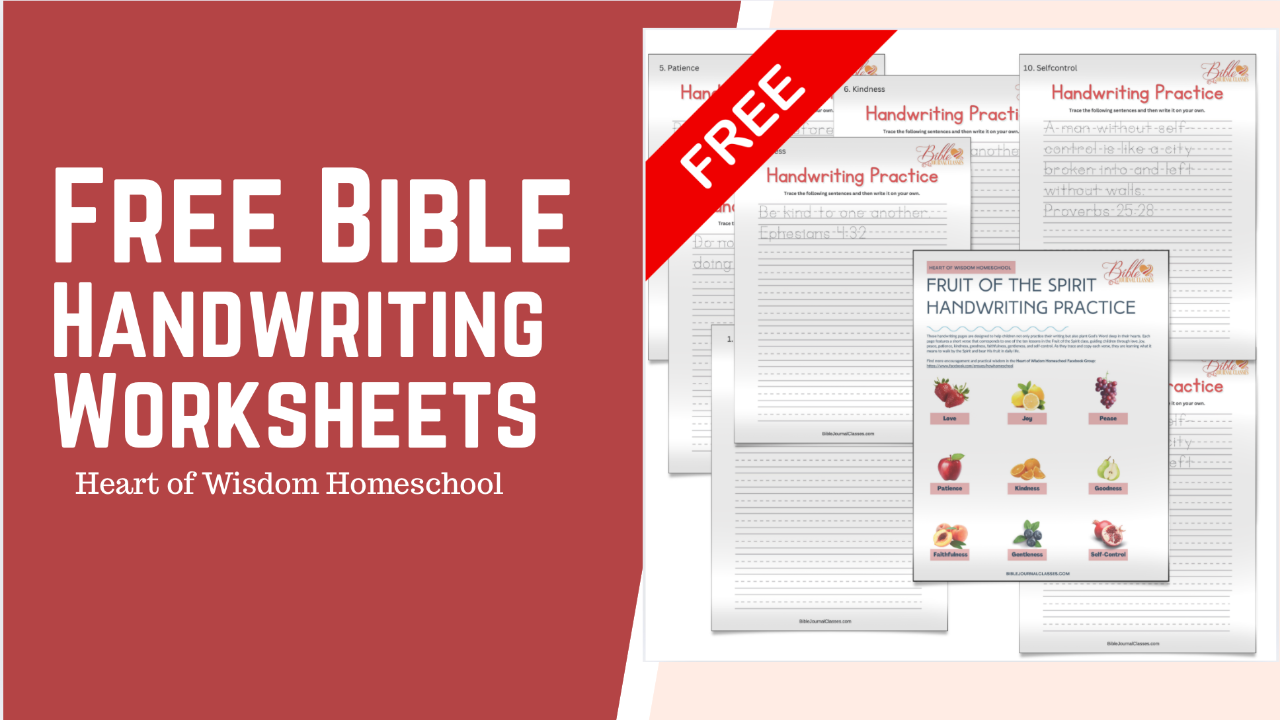
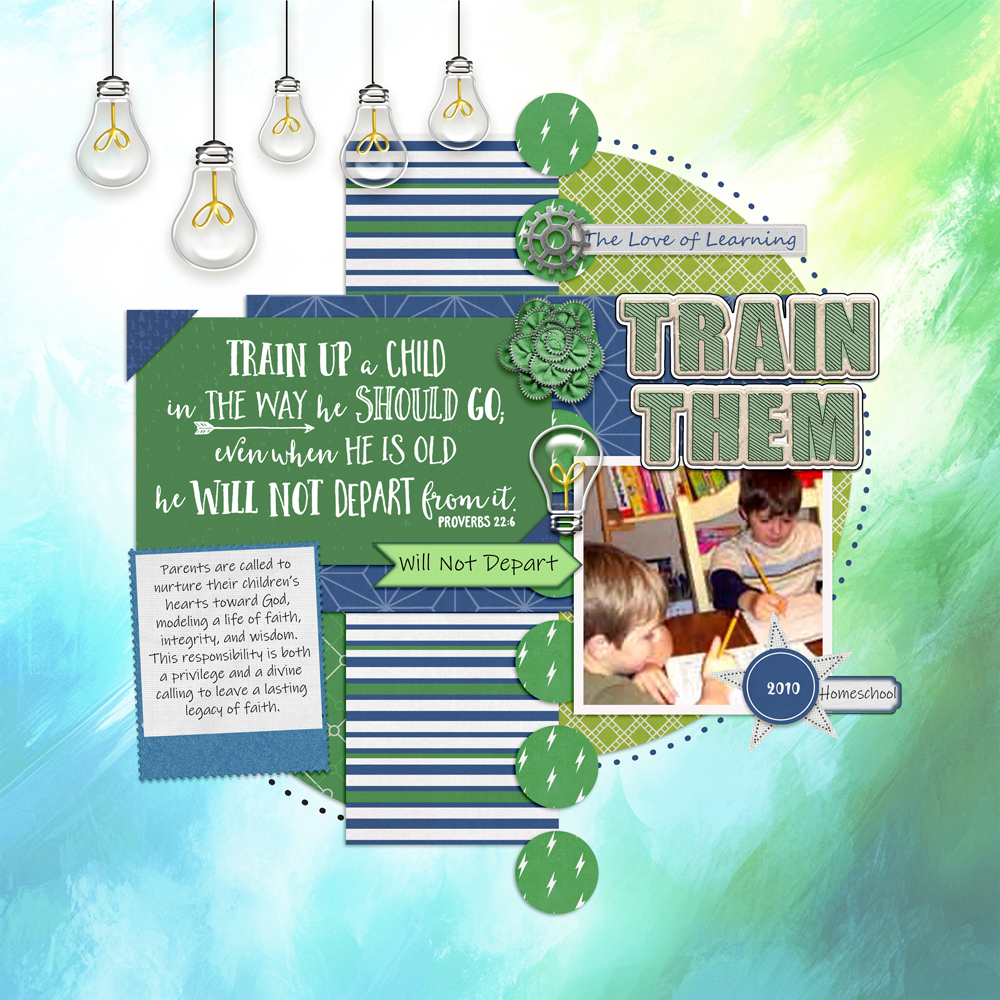
The images in this post are from my Bible journaling. It is a creative way to combined art and Scripture study. If you'd like to explore this meaningful blend of faith and creativity for yourself, I'd love to have you join me at BibleJournalClasses.com.
